

We begin not on a stage, but in an office. There are no theatrics here; no artificial framing for the camera. This is Triipy’s workspace; a functional, intentional environment where ideas are engineered before they are ever broadcast. It is a room that feels less like a studio and more like a headquarters, reflecting a creative who treats his output with the precision of a CEO.

Welcome to the debut of The Seven Desk by Run it Up! PH, a mixed-media series documenting the true pulse of our creative community. We’re stepping into the private workspaces of the ‘unconventional’ to prove that discipline, not waywardness, is the true engine of the creative. Our first subject is Triipy, an artiste who embodies this shift; a rising force in the Nigerian trap scene, sits comfortably, his dreadlocs and aesthetic fitting the mold of the modern creative – a look that, in many corners of Nigerian society, carries the heavy, often unfair weight of being labeled “wayward”. But as the dice roll and the fresh pineapple juice is poured, the tension between public perception and Triipy’s disciplined reality becomes the focal point of the afternoon. 
This is not just a story about a musician trying to “blow.” It is a window into the psyche of a new generation of West African creatives who are meticulously deconstructing the “starving artist” trope. Triipy represents a shift toward the creative-as-entrepreneur, where the music is the heartbeat, but the business ranging from fashion design to a head shop and more is the nervous system that keeps the dream alive in an unpredictable economy.
The Responsibility of the Outsider
Society often views the trap artiste through a lens of chaos, yet Triipy’s philosophy is rooted in a surprising level of personal accountability. Triipy rejects the stereotype that being a creative is an excuse for chaos “Well, I’ll say individuality,” he notes when asked what makes him easily misunderstood. For Triipy, being an artist is not an excuse for a lack of discipline. “You have to be responsible for yourself,” he explains, drawing a direct parallel between the studio and the bank. “It doesn’t matter if you’re an artiste or a footballer… If you don’t wake up by certain times… you’ll be sanctioned for it”.
This grounded nature stems from a childhood shaped by both privilege and sudden loss. Growing up with a father who worked for the NNPC, Triipy “felt the luxury” of the past, including weekend trips to Abuja and visits from high-ranking politicians. Everything changed in 2007 when his father passed away. Suddenly, the boy who was “quite bright” in school had to “man up early”. He traded his textbooks for the arts, finding a “music fire” in the church, where he began playing drums at age nine. This upbringing instilled a “No-No” moral code that governs his life today. “There’s some things that I just can’t do,” he says. “It all boils down to like how you were raised”.
Designing History: The Exotique Architect
Triipy’s creativity refuses to be contained by a microphone. Under his brand, Exotique, he translates the gritty history of Port Harcourt into wearable art. One particular design, titled “Hands Up,” serves as a stark memorial to the 2007 violence in Port Harcourt, a time when rival gangs fought for power and civilians were caught in the crossfire. “This is you now capturing history in your design,” interviewer Cedo observes. It’s a sophisticated move for an artiste often pigeonholed by his genre.
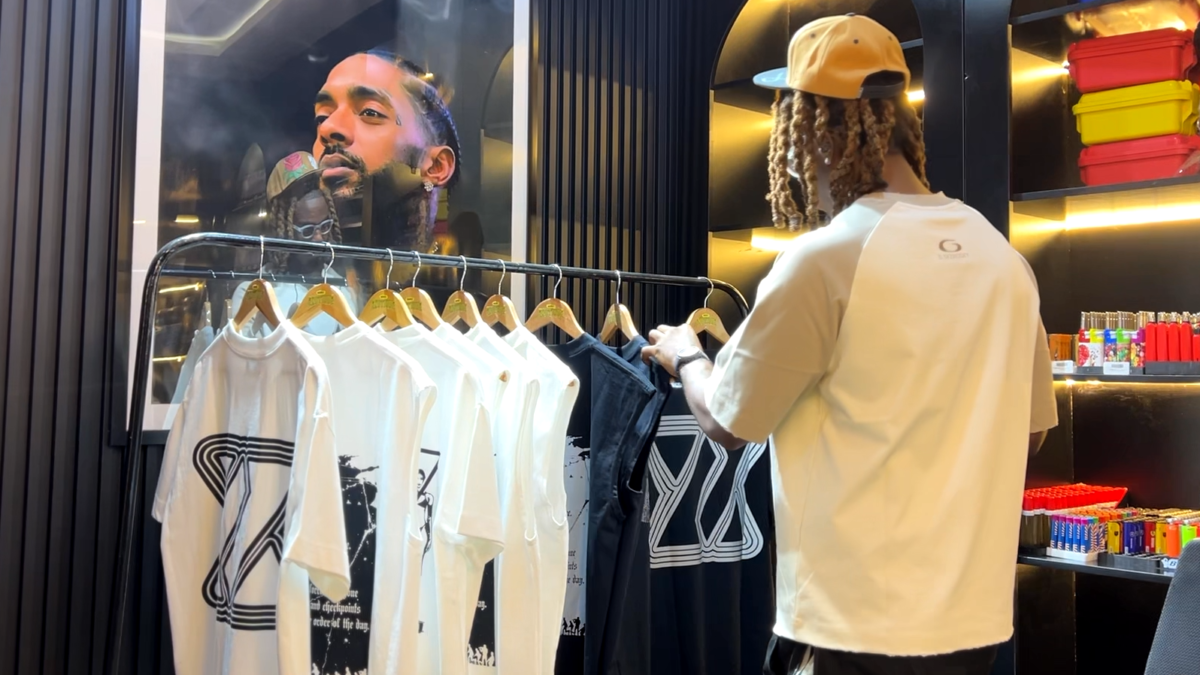
Beyond fashion, Triipy is a self-taught producer who crafts his own beats, a hobby he guards closely. “I make my beats personally for me,” he says, treating his “Trap Soul” sound as a private sanctuary for his most personal reflections. This multi-hyphenate approach isn’t just about artistic expression; it’s a calculated “hustle” to “get the bag”.
Midnight in Ajah: The Price of Lagos Dreams.
As the afternoon shifts, we move to The Artiste Residence, a boutique art hotel for creatives and lovers of the arts. The atmosphere changes, but the focus remains. A ludo board sits between us, and the steady click of game pieces punctuates a dialogue fueled by fresh pineapple juice and raw honesty. It is here that Triipy recounts his track, “12 A.M. in Ajah,” isn’t just a catchy title; it was born from an impulsive, “eye-opener” move to Lagos.
It’s a literal account of arriving in a strange city at midnight, alone and confused, he settled into a “scrab hotel” for 6,000 naira a night. “The sound is… personal to me,” he admits, “I had no friends there. So it was really kind of hard for me”.
Despite the hardship, the song has spent over 70 weeks on the City Choice charts, becoming a “morning song” for listeners navigating their own struggles. Despite the allure of the Lagos “hub,” Triipy has returned to his roots, preaching a philosophy of “homegrown fans”. He argues that while Lagos is an eye-opener, “You can’t run away from home,” he insists, “you always have to come back”
Don’t Call Me a Legend, Call Me a Boss
Perhaps the most striking thing about Triipy is his lack of interest in the traditional “legend” status. When the conversation turns to his place in history, and Cedo asked how he wants to be remembered, his answer is Refreshingly blunt: “I really don’t give a fuck about that”. In an industry obsessed with legacy, Triipy is looking for something more tangible. “I’m not even looking for a legacy. I’m looking for stability… for generational wealth,” he says.
He isn’t waiting for a handout or a predatory record deal; he is looking for “collaborations and partnerships” that bring positivity, much like his high-impact collaboration with the legendary Ice Prince, a childhood idol he eventually landed on a track through his A&R.
Triipy’s music is a vessel for truth, particularly in songs like “Trust,” where he observes that “trust is a word that’s used in a rush”. He is an artiste who values the depth of connection over the breadth of fame. As he looks toward the future, he remains “war ready,” driven not by the ghost of who he might become, but by the needs of his younger self
Watch the full episode of The Seven Desk with Triipy below:
To connect more with Triipy and see more of his works, visit his Linktree.
“I can’t see myself stopping,” Triipy concludes as the game winds down, “even though I have one listener or two listeners… I don’t see myself stopping anytime soon”